Key takeaways
- A superyacht is generally a professionally crewed vessel of 24 metres (about 79 ft) or more, the convention BOAT International uses.
- Moran classifies the largest vessels, 60 m (200 ft) and above, as megayachts, with gigayacht reserved for the extreme upper end.
- Cost divides in two: buying a yacht and chartering one for a week are very different commitments, and both vary widely.
- Carry more than 12 guests overnight and the Passenger Yacht Code applies, which drives larger crews and specialist certification.
- Moran has worked in yacht sales and charter as a family-owned firm since 1988.
A superyacht is a professionally crewed pleasure vessel that measures roughly 24 metres (about 79 ft) or more. That figure is the working line the industry uses, and BOAT International applies it across its glossary and its market reporting. Cross it, and a yacht stops being a private boat you might run yourself and becomes a vessel that needs a permanent, salaried crew to operate safely. Push much further and people start using different words. Moran Yacht and Ship reserves the word megayacht for the largest vessels, generally 60 m (200 ft) and up, with gigayacht kept for the rare giants beyond that.
Size and crew are the short version. What matters more, if you’re actually weighing a charter or a purchase, is what that size buys you and what it costs to keep running. This guide covers where the size lines fall, how a yacht differs from a superyacht and a megayacht, what one costs to buy and to charter, and how most people first step aboard.
How big is a superyacht? The size tiers
Size is where most questions start, so it is worth walking the ladder rung by rung.
A yacht, in everyday use, is any sailing or motor vessel built for pleasure rather than work, and many are small enough for an owner to skipper. In practice the term covers everything below the superyacht line, up to about 24 metres (79 ft), the point at which a permanent professional crew is not yet a requirement.
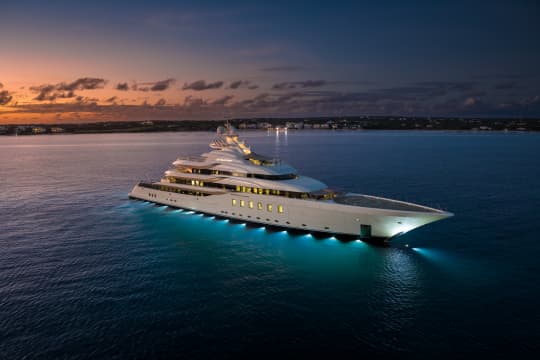
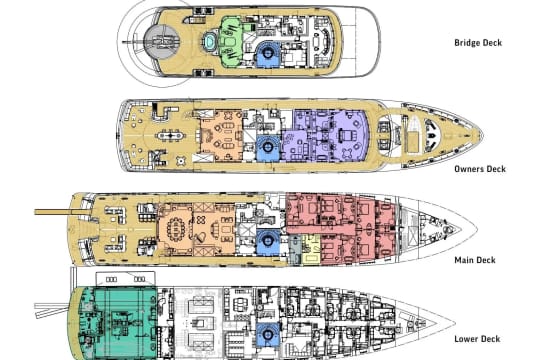
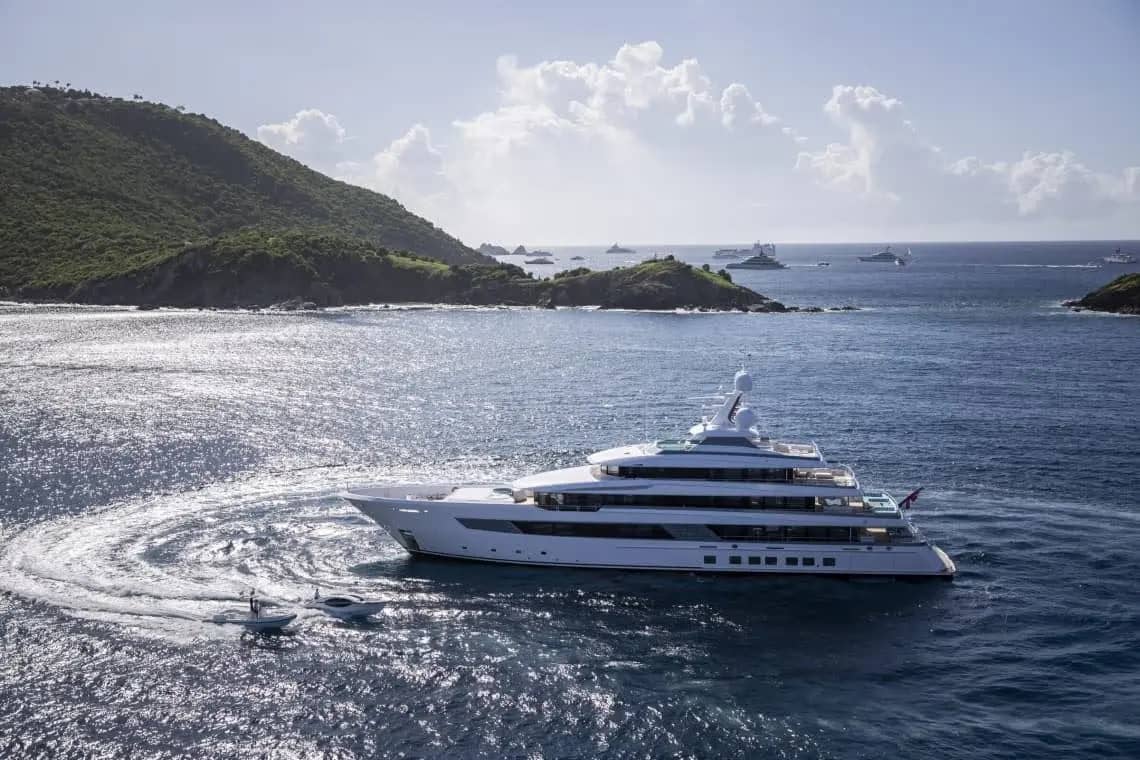
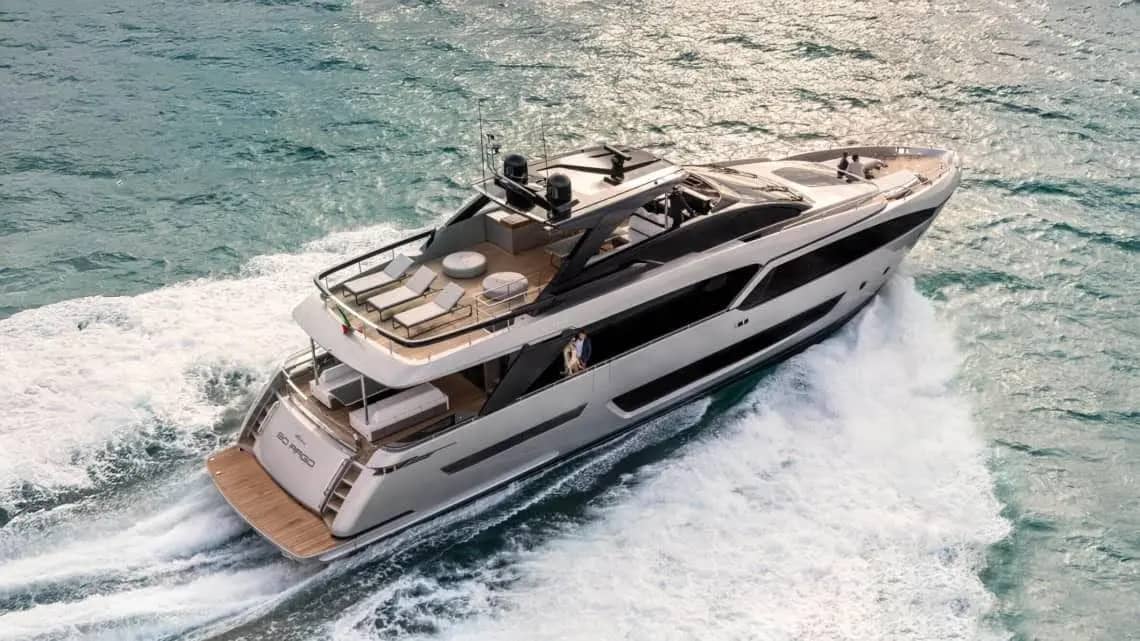
A superyacht begins near 24 metres, about 79 ft, and climbs from there. This is the point at which permanent crew, real range and the amenities people picture come as standard. LE REVE, at around 110 ft, sits just above the line, an entry-scale superyacht; ENTOURAGE, roughly 197 ft and built by Amels, shows the tier at full stretch: large enough to cross oceans, staffed to run continuously, and fitted out to a standard that only a full yard can deliver. A megayacht isn’t a different thing from a superyacht. It’s a bigger one: same crew and range requirements, just more of everything.
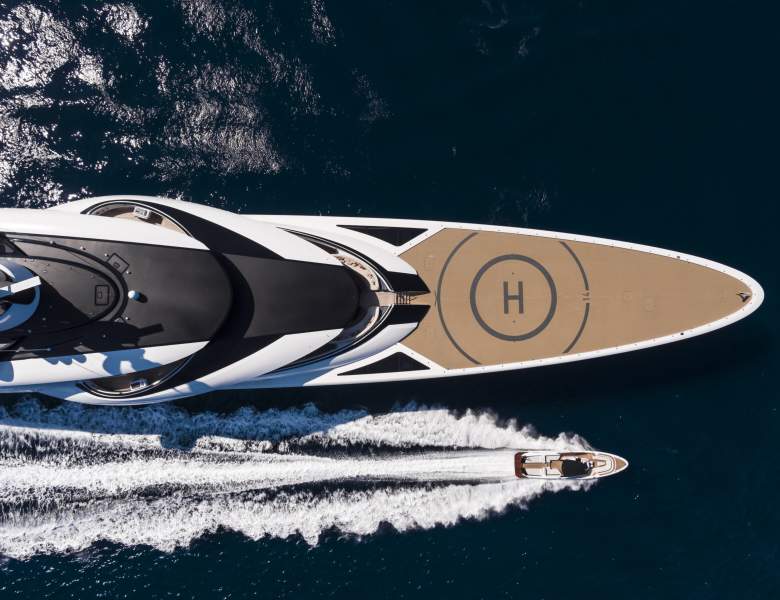
A megayacht, in Moran’s classification, is the upper band, generally 60 m (200 ft) and above. CC-SUMMER, at about 312 ft (95 m) from the Lürssen yard, belongs here. At this length a vessel carries the volume for multiple decks and a beach club, for tenders and for a crew large enough to run all of it around the clock.
Beyond even that sits the informal label gigayacht, used for the handful of vessels that dwarf the rest. There is no committee that ratifies the term. It simply marks the ceiling of what yards are building.
Length is only part of the story. Two vessels of the same length can differ sharply in interior volume, measured as gross tonnage, and volume is what decides how much yacht you actually get: deck space, headroom, tankage for range, room for the toys. A taller and beamier hull of the same length is a materially bigger vessel to run and to crew.
In practical terms: big enough that you need a professional crew and a home berth, small enough at the entry line that it still feels like a yacht and not a small cruise ship.
Yacht vs superyacht vs megayacht
The difference between yacht and superyacht is partly length and partly everything length brings with it: crew, guest capacity, running cost and the kind of ownership it implies. The table below sets the three tiers side by side, anchored to real vessels. Treat every figure as illustrative and current only at the time of writing.
| Category | Typical length | Typical guests | Staterooms | Crew | Indicative weekly charter | Ownership notes |
|---|---|---|---|---|---|---|
| Yacht | Up to about 24 m (79 ft) | Up to 12 | 3 to 4 | 1 to 4 | $30k to $150k | Entry to crewed yacht ownership; some owner-operated |
| Superyacht | 24 m (79 ft) and up; LE REVE (~110 ft) to ENTOURAGE (~197 ft) | 10 to 12 | 4 to 6 | 6 to 14 | $150k to $600k | Full-time crew; professional management the norm |
| Megayacht | 60 m (200 ft) and up; about 312 ft (CC-SUMMER) | 12 or more | 6 to 10+ | 12 or more | $500k to EUR 1.5M+ | Ship-scale operation; management, compliance and crew program essential |
Read the table as a spectrum, not three fixed boxes. A 24 metre superyacht and a 95 m megayacht are both crewed pleasure vessels, but almost nothing about running them is the same. That gap, more than the number on the tape, is what buyers and charter clients are really weighing when they compare superyacht vs megayacht.
What makes a yacht a superyacht (beyond length)
Length gets you in the door. What actually makes a yacht a superyacht is what it takes to build and run one.
Crew is the first thing that changes. Below the superyacht line an owner can often run the boat with help. Above it, a permanent professional crew is not optional. A crew lives aboard and keeps the vessel safe and ready: a captain, engineers, deckhands, interior staff. This is what the size actually requires day to day, and it is the part glossy photography tends to skip.
The build matters just as much. Superyachts come from a small set of yards whose names carry weight for good reason: Lürssen, Feadship, Amels, CRN among them. These are the houses that engineer to survey standard and stand behind the result. Understanding that world is a large part of Moran’s work in new yacht construction, where a build is managed from contract to delivery. That track record is not abstract. Moran has managed the delivery of more than 65 custom projects, sitting on the owner’s side of the table while the yard does the engineering.
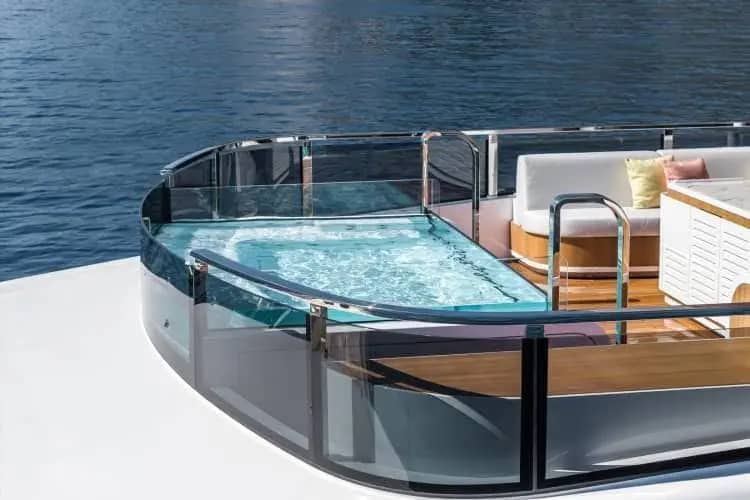
Amenities follow from volume. A beach club, a spa, a proper galley, tender garages, stabilisation that holds the boat steady at anchor: all of it needs the length and displacement a superyacht carries, and none of it is decoration bolted on.
Regulation is the part most first-time buyers don’t see coming. A private yacht carrying up to 12 guests operates under one set of rules. Carry more than 12 overnight and the vessel falls under the Passenger Yacht Code, the framework the Red Ensign Group administers, sometimes described as a special passenger license. Meeting it means heavier construction standards, more crew and specialist certification. The code raises the bar on stability, structural fire protection, life-saving equipment, manning, which is why crossing the 12-guest line changes the whole build and not only the paperwork. It is one reason so many private superyachts are built to stop at 12 guests. This is the sort of detail Moran calls The Knowledge, the operating fluency of people who have run vessels rather than only listed them.
How much does a superyacht cost, to buy and to charter
Buying and chartering are two completely different financial decisions, and people mix them up constantly. Buying and chartering aren’t the same decision. One’s a capital commitment, the other’s a holiday, and the numbers aren’t on the same scale.
To buy, price climbs with length, yard, age and specification. A smaller yacht at the entry of the superyacht range is a serious purchase but an approachable one by the standards of the market. A new megayacht from a top yard sits at the far end of it. Rather than quote a figure that would be wrong by the time you read it, we route buyers to a broker and to our guide on how much a yacht costs, where the ranges are kept current.
Two routes lead to ownership, and they price differently. A brokerage purchase, a yacht already built and cruising, lets a buyer see exactly what they are getting and step aboard sooner. A new build starts from a contract and a yard slot, costs more and takes years, and returns a vessel configured to the owner’s brief. Which one’s right depends entirely on the buyer, not on the boat. The choice turns on how particular the owner is and how soon they want to be on the water.
To charter, you pay a weekly rate plus expenses, and the rate tracks the same size ladder. As an illustration only, a smaller crewed yacht might run roughly $30k to $150k a week, a full superyacht around $150k to $600k, and a large megayacht from about $500k up to EUR 1.5M or more, before the running costs a charter carries on top. Those figures move with season, vessel and destination, so treat them as a sense of scale rather than a price. The weekly rate is only the base. On top sit fuel and food, dockage and the crew’s costs for the trip, commonly handled through an advance provisioning allowance, so the all-in figure runs above the headline number.
Ownership carries a running cost most people underestimate. As a rule of thumb the industry cites, annual running costs run to a meaningful share of a yacht’s value once you add crew salaries, dockage, fuel, insurance, refit, class survey. That is the figure a good manager exists to control, and it is why owners weigh whether to charter, to buy secondhand, or to commission a build. If you are early in that decision, our note on buy now or build lays out the trade.
Experiencing a superyacht: charter vs ownership
For almost everyone, the first time aboard is a charter, and that is the sensible way in.
A week’s charter buys the vessel and the crew and a curated itinerary, all without the commitment of ownership. The right boat is matched to the party and the cruising ground, the captain and crew handle the running of it, and a broker shapes the route so the days flow. It is the clearest test of whether a particular size and style of yacht actually suits how you like to travel. Moran runs this through a dedicated superyacht charter with Moran desk, with vessels across the Mediterranean and the Caribbean.
Where you cruise shapes the boat as much as the boat shapes the trip. A Mediterranean summer around the French Riviera or the Amalfi Coast asks for different things than a Caribbean or Bahamas winter, and a broker who knows both grounds will steer the match toward the right vessel.
Ownership is the step for those who want the yacht on their own terms: their layout, their crew, their calendar. It brings the full weight of operation, compliance and cost, which is exactly where an integrated firm earns its keep. Buyers who reach that point can browse current superyachts for sale and work a purchase through with a broker who knows the boats and the yards behind them. Owning is also where running the vessel begins, and a managed program keeps the crew and the accounts and the compliance in order so the yacht is ready when the owner is.
Why work with Moran: The Knowledge
Moran Yacht and Ship was founded in 1988 by Robert Moran, a former captain, and it remains a family-owned firm more than three decades on. That origin matters because the people advising you came off the water. The in-house team runs to veteran captains and chief engineers, maritime professionals rather than generic account managers, and that is what we mean when we say The Knowledge.
The firm works across the full arc of a yacht’s life. Sales and charter sit alongside yacht management and new construction, so the same expertise that helps you buy or charter a vessel can also build one and run it. That reach is spread across three offices, in Fort Lauderdale, in Newport and in Monaco, close to the yards and the cruising grounds owners care about. The advantage of keeping it under one roof is continuity. The broker who helps you charter can point you toward a purchase, the construction team can manage a build, and the management side can run the vessel afterward, so what is learned at one stage carries into the next. For the full background, see about Moran Yacht and Ship.
Frequently asked questions
How long is a superyacht?
24 metres (about 79 feet) and up. Past 60 metres, we’d call it a megayacht.
What is the difference between a yacht and a superyacht?
Length and everything it brings. A yacht can be small enough to run yourself. A superyacht, from around 24 metres up, needs a permanent professional crew, offers ocean range and true onboard amenities, and is almost always professionally managed.
How much does it cost to charter a superyacht?
It depends on size, season and vessel, plus running expenses on top of the base rate. As an illustration only, weekly rates might span roughly $30k for a smaller crewed yacht to about EUR 1.5M or more for a large megayacht. Rates change, so speak to a broker for a current quote.
How many crew does a superyacht have?
Enough to run it safely around the clock. That number climbs fast once you’re carrying more than 12 guests, since the Passenger Yacht Code kicks in.
Explore superyachts with Moran
If you are ready to see what fits, browse yachts for sale or view charter yachts from the Mediterranean to the Caribbean. Prefer to start with a conversation? Speak to a Moran broker through our contact page, and we will match the vessel and the crew to how you actually want to spend the time.